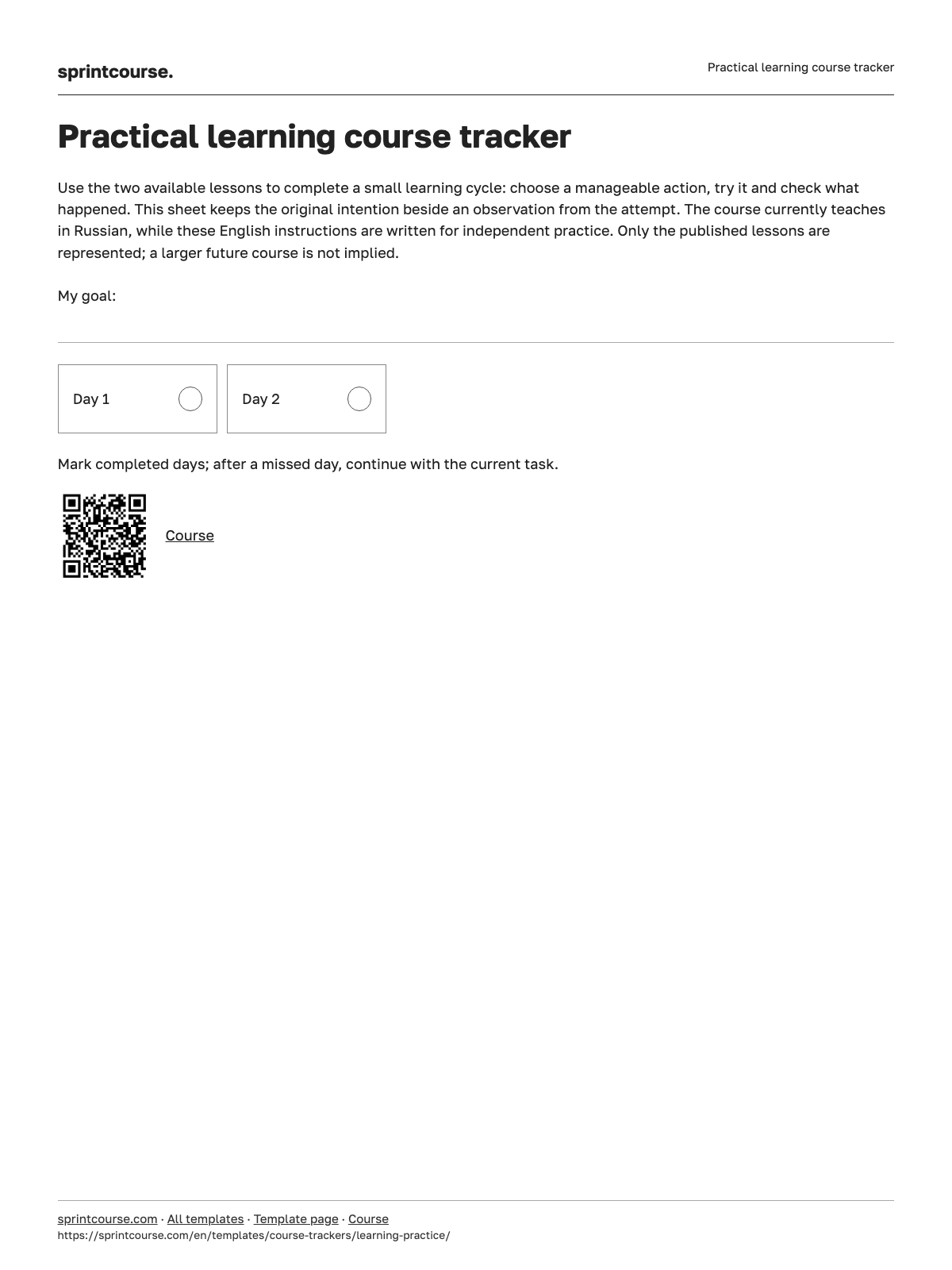
Use the two available lessons to complete a small learning cycle: choose a manageable action, try it and check what happened. This sheet keeps the original intention beside an observation from the attempt. The course currently teaches in Russian, while these English instructions are written for independent practice. Only the published lessons are represented; a larger future course is not implied.
Opens a PDF. Choose the matching paper size and 100% scale in the print dialog. Links to the template and course are clickable in the file.
Online completion is coming later.
How to use it
Choose a real task small enough for one attempt. Name the interface or situation and a change you can make in ten minutes. Reduce a broad learning ambition to an action with a visible finish line.
Before the first lesson, write the expected outcome in plain words. Try the action and save an example: a screenshot, a short passage or a sketch. The first mark records a completed attempt rather than a perfect performance.
For the second step, check the example with another person or a specific criterion. Avoid giving hints in advance. Record a pause, misunderstanding or difference from the intended outcome so the next adjustment has evidence behind it.
Compare the intention with the observation after the second mark. Choose one further change and a time to try it. If the steps are separated by a break, return to the saved example instead of replacing it with a new broad goal.
Daily tasks
Day 1
Choose one real interface and one change you can finish in ten minutes. Name the user action it should support, make the change and record what you expect to improve.
What did you observe while practising “Choose a small step”, and which result will you test next?
Day 2
Ask another person to complete your chosen interface task without hints. Note where they pause, compare the result with your original intention and choose one small adjustment to test next.
What did you observe while practising “Check the result”, and which result will you test next?
Tips for practice
Make the action small enough to finish
Learning design is too broad to supply a finish line. Replace the ambition with one example and a visible change, such as emphasizing the main screen element or rewriting an instruction. A short time limit exposes parts that are still too large. If ten minutes is not enough, reduce the object of practice while preserving a useful outcome criterion.
Ask for feedback about a specific task
Rather than asking whether someone likes the result, ask them to complete a defined action without hints. Observe where they stop and how they explain a choice. Write the observation before discussing possible improvements. This order separates evidence from your own interpretation and leaves a concrete question you can investigate in the next exercise.
Keep a record between the two lessons
Save the first example after checking it. Label it with the original intention and the difference you observed. Those two lines restore context when you return after a few days. Keep later attempts separately so you can compare changes instead of judging the whole skill from a single impression of the latest version.
Continue with the course
This tracker accompanies the course “Как учиться на практике”. Use the paper for check marks and observations, and open the lessons for explanations and practical exercises. The course currently teaches in Russian; the tracker has an independently written English edition. Its steps match the lessons that are actually available.
Yes, if your example is small and you can check it after the first attempt. The lessons do not require a fixed interval on a calendar. Preserve their order: intention and action first, observation and comparison second. That sequence helps avoid replacing a real check with an explanation you invented before trying the task.
What if nobody is available to check my example?
Return to the initial criterion and inspect the saved result yourself. Name the limitation of that check and keep a question for another person later. Do not invent a user reaction. A short honest observation is useful because it helps you select another feasible check, even when the evidence is incomplete.
How should I reuse the printed sheet?
Print a fresh copy for a different example or label attempts with dates. The PDF includes clickable links to the template, collection and course so you can return directly from the file. Choose A4 or US Letter to match your paper; the minimal version works well on an ordinary monochrome printer.
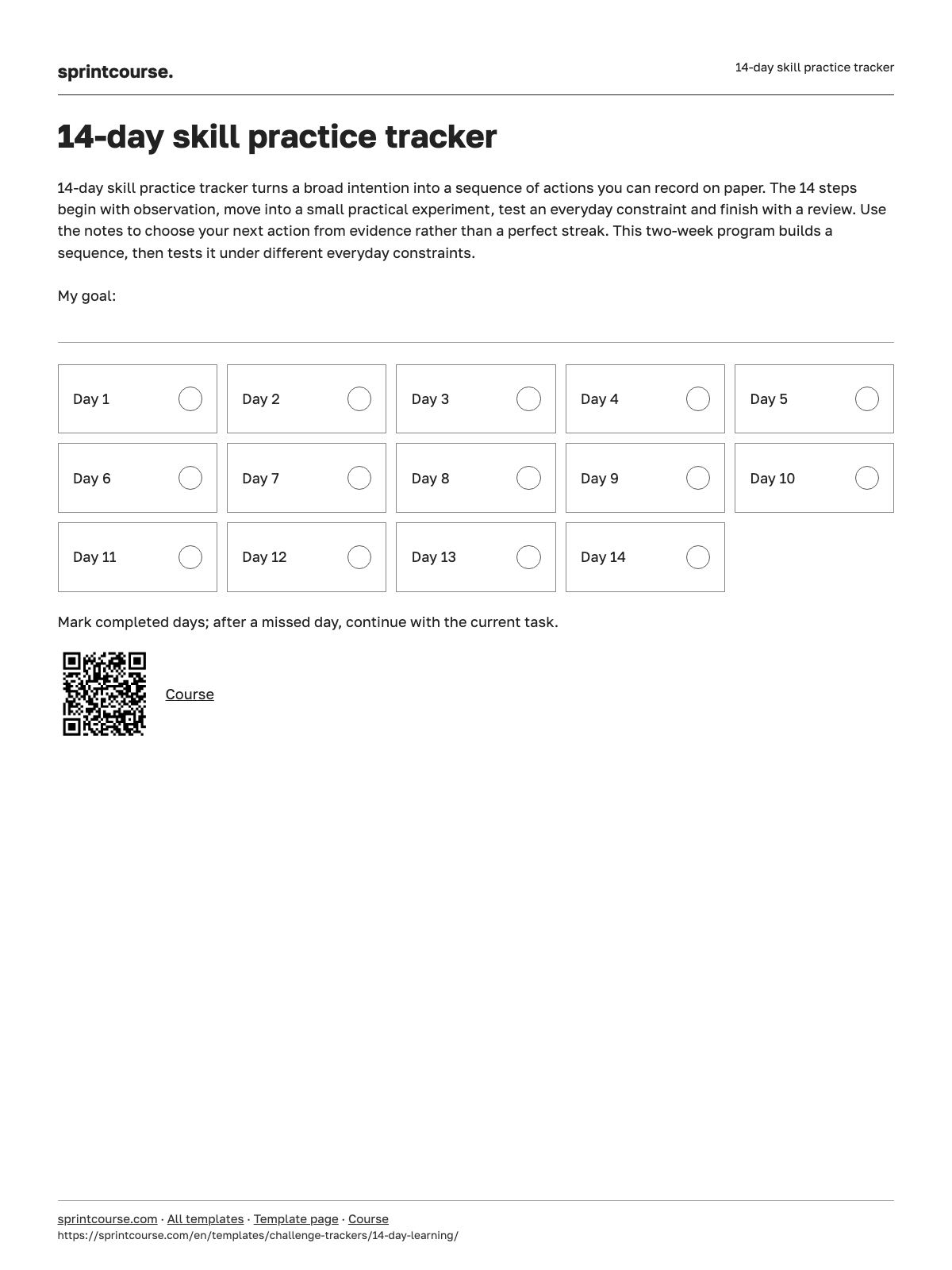
14-day skill practice tracker turns a broad intention into a sequence of actions you can record on paper. The 14 steps begin with observation, move into a small practical experiment, test an everyday constraint and finish with a review. Use the notes to choose your next action from evidence rather than a perfect streak. This two-week program builds a sequence, then tests it under different everyday constraints.
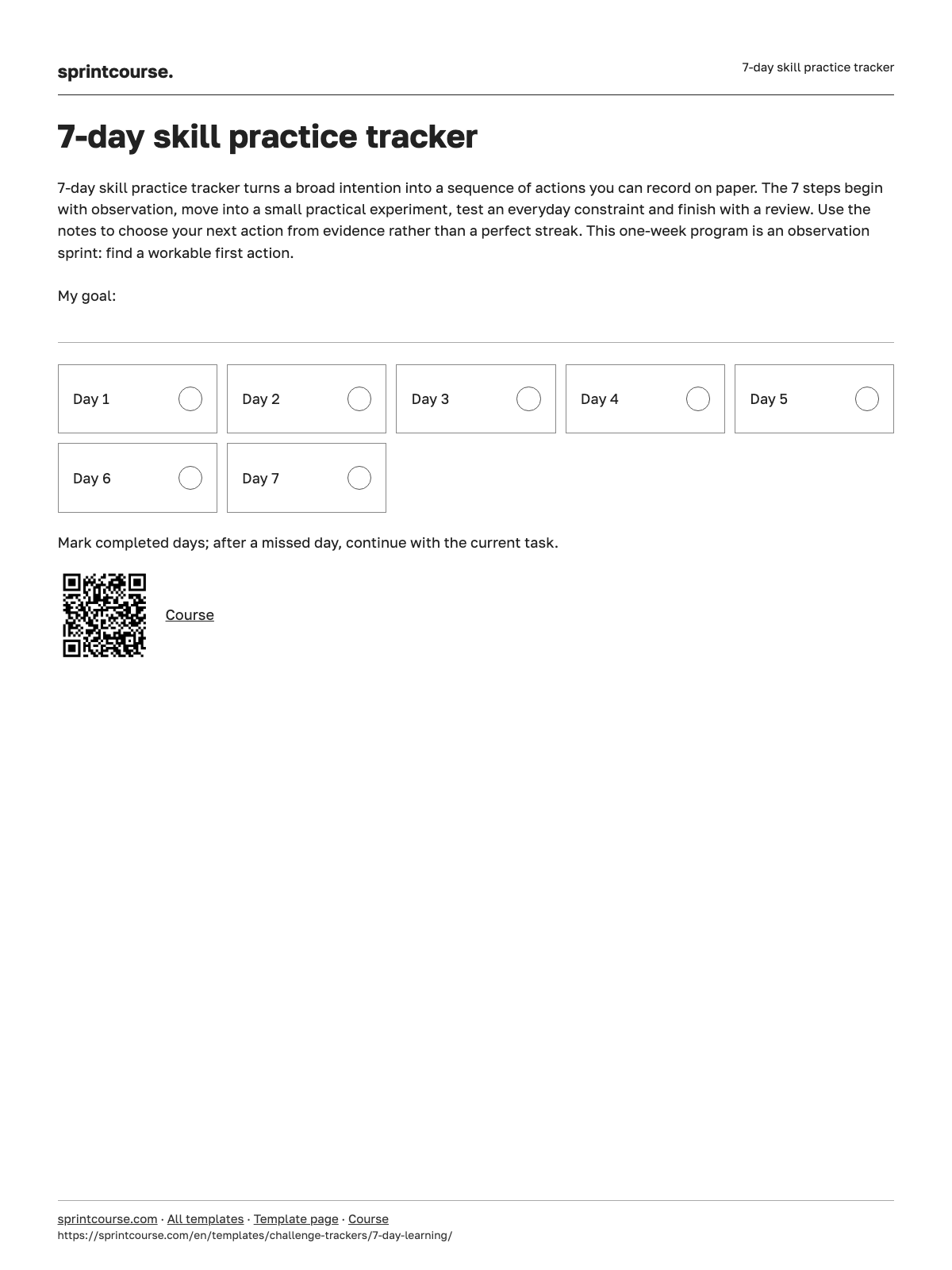
7-day skill practice tracker turns a broad intention into a sequence of actions you can record on paper. The 7 steps begin with observation, move into a small practical experiment, test an everyday constraint and finish with a review. Use the notes to choose your next action from evidence rather than a perfect streak. This one-week program is an observation sprint: find a workable first action.
 sprintcourse