 sprintcourse
Lesson 2 of 30 · 10 min · 7 steps
Day 2. Search intent: what the person actually wants
The key idea
A query represents a task
Every query has an intent. Search engines try to show the types of pages that solve that task. A page in the wrong format may struggle even if it is well written.
Four basic types
- Informational: learn or understand, such as ‘how to choose a coffee grinder’ or ‘what is coffee roasting’. Articles, guides and videos fit.
- Commercial investigation: compare before buying, such as ‘best coffee grinders 2026’ or ‘De’Longhi vs Krups review’. Reviews, comparisons and shortlists fit.
- Transactional: take action, such as ‘buy coffee beans’ or ‘book a bathroom renovation’. Product, category and service pages need prices and a clear action.
- Navigational: reach a particular site, such as ‘Amazon login’ or ‘online banking login’.
Queries can also have local intent: ‘coffee shop near me’ or ‘phone repair Bristol’ often trigger maps and business listings.
Read intent from the results
Open the results and examine the top ten pages. Mostly stores? An article may be the wrong format. Mostly guides? A product listing may struggle. Results reveal the formats the search engine currently considers useful for that query.
Four types of search intent
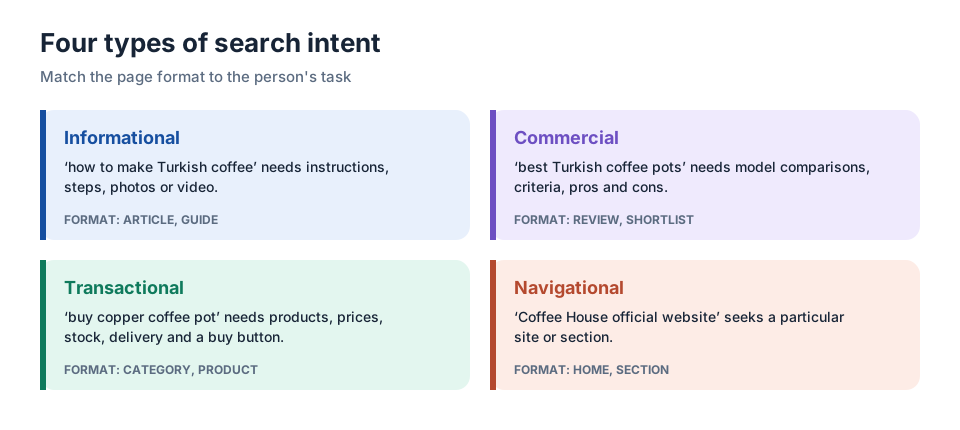
The right format for ‘buy copper coffee pot’
A store tries to rank a historical article for a buying query.
Before
The visitor wants to buy but gets a history lesson. Without prices, products or a purchase action, they will likely return to the results.
After
A category with filters, prices, availability and delivery answers the buying task. A short guide below the products helps visitors choose.
How an expert reasons
Stores and marketplaces dominate these results, suggesting transactional intent. Move the history into its own informational article and link from it to the category.
Mixed intent
Some queries, such as ‘home coffee grinder’, return both articles and shops. Both formats may work. Choose the one that fits your goal and serves the task more completely than competing pages.
Check your understanding
Check your understanding
Identify intent for your pages
- Choose three queries you want traffic from.
- Inspect each result set and count articles, categories/products and comparisons in the top ten.
- Identify the intent and compare it with your current target page.
Record: query → intent → does your page match? → what needs to change.
Saved automatically, even offline.